
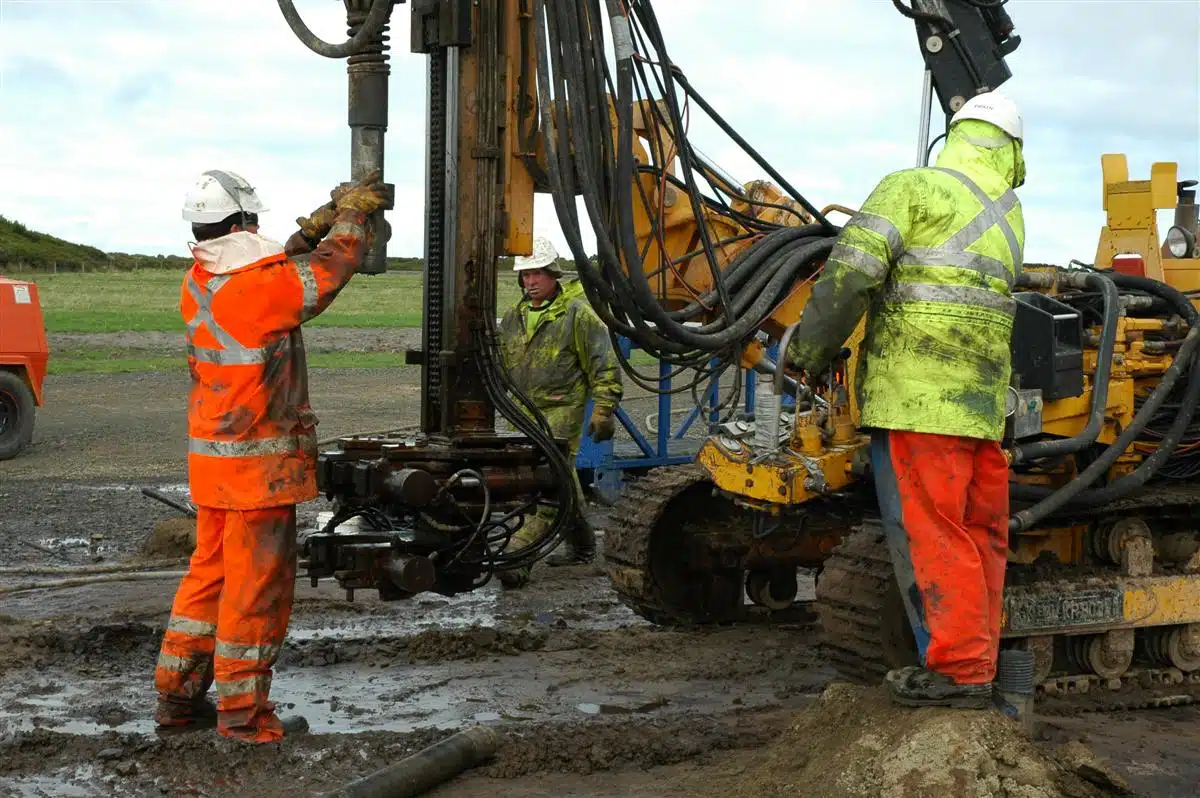
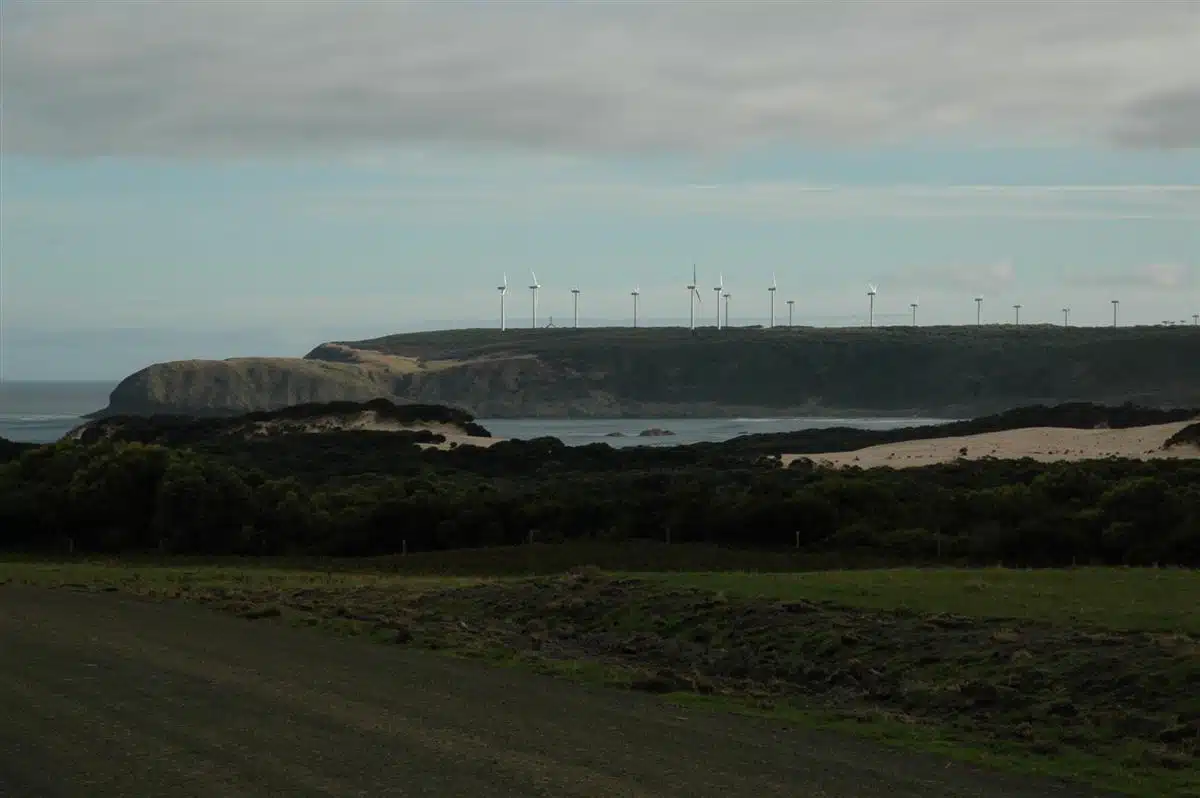
Menard Oceania successfully delivered ground improvement works for the Studland Bay Wind Farm in north-west Tasmania, supporting the construction of several wind turbine foundations where subsoil enhancement was required to achieve the necessary bearing capacity for large concrete turbine pads.
Given the site’s geological conditions, Menard undertook both the design and construction of Compaction Grouting to improve the ground beneath selected turbine foundations. This project demonstrates Menard’s strong capability in stabilising loose and variable sand deposits, which are commonly encountered in coastal and aeolian environments across Australia.
Ground Conditions:
The Studland Bay site presented a combination of challenging subsurface conditions requiring a targeted and reliable ground improvement solution, including:
- Aeolian sand deposits of varying thickness across the site
- Loose to very loose sand layers
- A high groundwater table, approximately 1.7 m below ground level
- Localised hardpan layers encountered between 1-3 m depth
Structural Requirements:
The turbine foundations were subject to significant overturning moments, imposing critical performance requirements on the supporting ground. These demands, combined with the subsurface conditions, made Compaction Grouting the most suitable solution.
Ground Improvement Solution-Compaction Grouting:
Menard implemented its Compaction Grouting technique at five turbine foundation locations, increasing soil density and bearing capacity while maintaining precise control over the treatment depth.
Compaction Grouting is particularly effective for:
- Loose granular soils
- Mitigation of liquefaction risk
- Variable geological profiles
- Sites requiring minimal surface disturbance
- Applications requiring accurate, localised treatment
By injecting a stiff, low-mobility grout, Menard Oceania was able to densify and reinforce targeted soil layers without adversely affecting natural drainage conditions or generating significant spoil.